
Storing Lyophilised Vials in a 30–40 °C Room: What Ambient Storage Costs You
A sealed, dry cake tolerates heat far better than any solution does — but a hot room is not the storage condition your certificate describes, and the cost is paid in moisture, in unquantified shelf life, and in a record you cannot rebuild later.
A correctly lyophilised, tightly sealed, low-moisture vial tolerates a hot room far better than any solution does — that is most of what freeze-drying exists to buy. But tolerating is not the same as being unchanged, and a room that sits between 30 °C and 40 °C is not the condition lyophilised material is specified to be held under, nor the one any storage statement on a certificate refers to. Ambient storage in a tropical or arid climate is paid for in three currencies: a shortened and unquantified usable life, a moisture ingress rate that rises with every degree and every point of humidity, and — the one most benches overlook — a storage record that cannot be reconstructed afterwards.
Fix the third one first. It costs almost nothing and it is the only one that is genuinely irreversible. Material stored warm can be re-assayed later. A five-month hole in the temperature record cannot be filled in retrospectively, and it is the hole, not the heat, that makes a lot indefensible when someone asks what happened to it.
What "room temperature" means on a stability statement
The phrase has a definition, and it is narrower than the plain-English reading. In the United States Pharmacopeia, Controlled Room Temperature is not a range you sit anywhere inside; it is a nominal 20–25 °C with a mean kinetic temperature that must not exceed 25 °C. Excursions between 15 °C and 30 °C are tolerated as normal warehouse and transit reality, and transient spikes up to 40 °C are permitted only when they do not exceed 24 hours [1]. Note the shape of that allowance: the chapter cares about the duration of a spike, not merely its height. A revision harmonising the nominal range with the 15–25 °C used elsewhere has been proposed and was out for public comment during 2026, so check the current chapter rather than a remembered figure [1].
The stability data behind a shelf-life figure come from a different vocabulary again. ICH Q1A(R2) defines the study conditions: long-term at 25 °C ± 2 °C and 60% RH ± 5%, an intermediate condition at 30 °C ± 2 °C and 65% RH ± 5%, and an accelerated condition at 40 °C ± 2 °C and 75% RH ± 5% run for six months. The accelerated arm is a stress test used to decide whether the intermediate arm is needed — it is not a licence to store anything at 40 °C [2].
None of those defaults were written for this continent. The World Health Organization publishes a table assigning every Member State to a climatic zone, and most African states fall into Zone III, Zone IVa or Zone IVb, whose long-term conditions are 30 °C at 65% RH and 30 °C at 75% RH respectively [3]. That is the practical point: a store room in Lagos, Mombasa or Douala that reads 31 °C in the afternoon is not drifting at the edge of Controlled Room Temperature. It is sitting at, or above, the intermediate study condition for months at a time. The material is not thereby worthless. What is no longer valid is the shelf-life date, because that date was calculated for a different room.
| Condition | Temperature | Relative humidity | What it is for |
|---|---|---|---|
| Controlled Room Temperature (USP) | 20–25 °C nominal, MKT ≤ 25 °C | Not specified | Excursions 15–30 °C tolerated; transient spikes to 40 °C only if under 24 hours |
| ICH long-term (Zones I and II) | 25 °C ± 2 °C | 60% RH ± 5% | The default room behind most shelf-life figures |
| ICH intermediate | 30 °C ± 2 °C | 65% RH ± 5% | Invoked when accelerated data show significant change |
| ICH accelerated | 40 °C ± 2 °C | 75% RH ± 5% | Six-month stress test, not a storage condition |
| WHO Zone IVa long-term | 30 °C ± 2 °C | 65% RH ± 5% | Hot and humid Member States |
| WHO Zone IVb long-term | 30 °C ± 2 °C | 75% RH ± 5% | Hot and very humid Member States |
Why the average on the wall thermometer flatters you
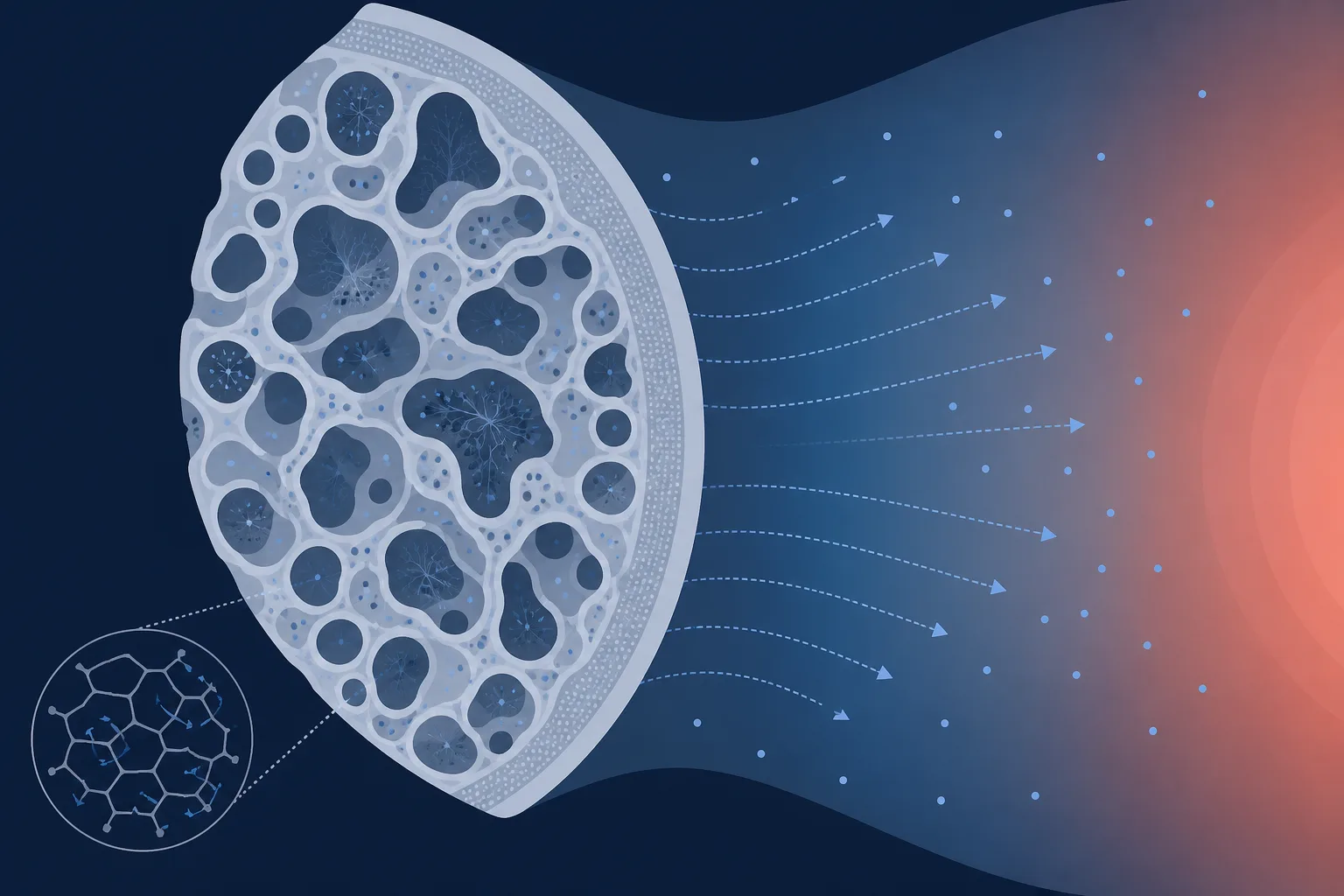
Every standard above is phrased around mean kinetic temperature rather than arithmetic mean, and the distinction matters most in exactly the rooms this article is about. The concept was introduced in 1971 as a "virtual temperature": the single constant temperature that would produce the same amount of chemical change as the varying real one, derived from the Arrhenius relationship between temperature and reaction rate [4]. Because that relationship is exponential, hot hours count for more than cold hours refund. A room that swings from 24 °C at dawn to 38 °C at three in the afternoon does not behave like a steady 31 °C room; it behaves like something warmer.
The gap is small where the daily swing is narrow and grows as it widens — commonly a fraction of a degree in a buffered interior room, and one to three degrees where a store sits behind a west-facing wall under a metal roof. That is the argument for shade and thermal mass even when you cannot lower the daily mean at all: narrowing the swing lowers the mean kinetic temperature independently. It is also why a minimum–maximum thermometer is a weak instrument here — it records the extremes and discards the duration, and duration is what the 24-hour spike allowance turns on [1].
Moisture, not heat, is usually what ends a cake
Solid-state degradation of peptides and proteins runs through a well-catalogued set of chemical routes — deamidation, peptide-bond hydrolysis, oxidation, the Maillard reaction with reducing-sugar excipients, β-elimination and aggregation — and the reviews of that literature are consistent that water content and physical state govern their rates as strongly as temperature does [5]. Heat without water is a much slower problem than heat with water. Everything a hot store room does to a lyophilised vial passes through moisture.
The mechanism is the glass. A freeze-dried cake is normally an amorphous solid whose molecules are kinetically immobilised below its glass transition temperature; formulation practice is to keep storage comfortably beneath that transition, because above it molecular mobility and degradation rates climb sharply [6]. Sorbed water is a plasticiser: taking up moisture pulls the glass transition temperature down. So a hot room and a humid room attack the same margin from two directions — one raises the storage temperature, the other lowers the threshold it has to stay under.
Water does not need the vial to be opened to get in. Work measuring moisture transfer from elastomeric closures into freeze-dried solids at 5 °C, 25 °C and 40 °C found the transfer strongly temperature-dependent, and identified external water vapour permeating through the closure as the dominant contributor over long storage under humid conditions [7]. Every rubber formulation has a characteristic vapour transmission rate, and the driving force across that closure is set by the ambient humidity outside it. In a Zone IVb store room that reference humidity is 75% RH by definition [3], and the transfer runs every hour of the storage period, not only when someone is in the room.
What ambient storage costs, stated honestly
The honest answer is that the cost is unquantified rather than known, and anyone who converts "stored at 33 °C for five months" into a percentage remaining without assaying the lot is guessing. Solid-state degradation rates are specific to the compound, the excipient matrix, the residual moisture and the physical state of the cake, and extrapolating from short accelerated studies to real time is unreliable for amorphous solids — particularly across a glass transition, where the underlying rate law changes rather than merely scaling [8]. That is a limitation of the science, not a gap in your supplier's paperwork.
The defensible position is therefore not a number but a set of statements you can support.
- Treat material held outside Controlled Room Temperature as of unknown remaining content until it is assayed, and say so on the internal label rather than in someone's memory [1].
- Do not carry a manufacturer's shelf-life date forward as though it applied — that date was derived under study conditions your room did not reproduce [2].
- Record the storage regime the lot actually experienced, so the record travels with the material when the material moves.
- Where a result depends on content, assay the working lot rather than reasoning from the certificate of the shipment.
Containment when mains power is not dependable
Refrigeration is the obvious answer and, across much of the continent, the fragile one — the World Bank tracks firms experiencing electrical outages as a standing Enterprise Surveys indicator precisely because it stays high and persistent across the region [9]. A refrigerator that holds 4 °C for twenty hours a day and 26 °C for the other four is not a 4 °C store; it is a store with a documented daily excursion, and it may be worse for a sealed cake than a stable warm cupboard, because each warm interval drives a fresh re-equilibration at the closure. Stability, in the literal sense, is worth more than a low set point you cannot hold.
| Approach | What it buys | Where it fails |
|---|---|---|
| Interior room, no exterior wall or window | Removes solar gain and most of the daily swing; costs nothing | Does nothing about a sustained regional heat event |
| Insulated chest box with thermal mass | Carries a night-cooled temperature through the afternoon peak | Needs recharging nightly; degrades fast if opened often |
| Frozen water bottles or phase-change packs | Rides through an outage of several hours | Direct contact with a vial creates a cold spot and a condensation risk |
| Chest-style refrigerator | Retains cold air when opened, unlike an upright | Still needs power; internal uniformity is poor until mapped |
| DC-compressor refrigerator on a battery bank | Survives outages by design rather than by luck | Capital cost; the bank has to be sized for the worst month, not the average one |
| AC refrigerator behind an inverter | The common improvisation, and better than nothing | Fails quietly as the battery ages — the logger is the only warning you get |
Whichever of those you can afford, the thing that makes the arrangement defensible is the logger inside it, not the box around it. An unmonitored refrigerator and an unmonitored cupboard produce the same record: none.
The minimum monitoring record
WHO's model guidance for storing and transporting time- and temperature-sensitive pharmaceutical products sets out the expectations that most national regulators either adopt or mirror, and it is written for exactly this operating context rather than for a temperate one [10]. Its technical supplement on temperature mapping is the part worth reading twice: it describes characterising a storage area to find its warmest and coldest points before trusting it, and placing the monitoring sensor at the documented worst point rather than the convenient one [11]. A sensor by the door of a room whose hot spot is the top shelf against the west wall is producing a comforting fiction.
- Map the space before use — a few days of logging at several positions, hot spot and cold spot identified and written down [11].
- Log continuously at intervals of fifteen minutes or shorter, at the mapped worst point, and archive the downloads per storage period rather than overwriting them.
- Compute mean kinetic temperature for each period, not just minimum and maximum, because that is the figure the standards are phrased in [4].
- Keep an excursion log with start time, end time, peak, duration and what was in the room — duration is what the 24-hour spike allowance depends on [1].
- Label each vial with the storage regime it actually experienced, so the history survives a change of custody.
Where the evidence is genuinely thin
It would be dishonest to present the above as settled for research-grade material. Published solid-state stability data are dominated by licensed biologics with fully characterised formulations, where the excipient matrix, residual moisture specification and glass transition temperature are all known quantities. Research lots frequently carry bulking agents and buffer salts that are not stated quantitatively, and the glass transition depends on precisely those unstated details [6]. In practice the single most useful number for predicting a cake's ambient behaviour is one you cannot look up.
Two further limits deserve stating plainly. First, a room-temperature stability claim on a certificate is often inherited from a compound datasheet rather than generated by a study on that lot under Zone IV conditions — a scope problem, not necessarily a dishonesty problem, but you should read it as the former, and put the same question to the neighbouring fields, because what each entry on a certificate establishes is narrower than it looks. Second, six months of accelerated data answers "will this survive shipping" much better than it answers "will this survive a year at 32 °C", because the two questions sit on different parts of the rate curve [2][8]. Where a decision depends on the answer, the assay is the answer and the extrapolation is not.
References
- General Chapter <659> Packaging and Storage RequirementsUnited States Pharmacopeia–National Formulary (USP–NF)
- Q1A(R2) Stability Testing of New Drug Substances and ProductsInternational Council for Harmonisation of Technical Requirements for Pharmaceuticals for Human Use (ICH), 2003
- Stability Conditions for WHO Member States by RegionWorld Health Organization, 2018
- Worldwide virtual temperatures for product stability testingJournal of Pharmaceutical Sciences, 1971
- Solid-state chemical stability of proteins and peptidesJournal of Pharmaceutical Sciences, 1999
- Lyophilization and development of solid protein pharmaceuticalsInternational Journal of Pharmaceutics, 2000
- Moisture transfer from stopper to product and resulting stability implicationsDevelopments in Biological Standardization, 1992
- Stability of Protein Pharmaceuticals: An UpdatePharmaceutical Research, 2010
- Enterprise Surveys indicator: Firms experiencing electrical outages (% of firms)World Bank
- Model guidance for the storage and transport of time- and temperature-sensitive pharmaceutical products (WHO Technical Report Series No. 961, Annex 9)World Health Organization, 2011
- Temperature mapping of storage areas — Technical supplement to WHO Technical Report Series No. 961, Annex 9World Health Organization, 2015